Drugstore museum hooks visitors with old-timey treats and pharmaceutical history
Hook’s Drugstore Museum is a monument to the historic Indiana drugstore chain and honors the development of the pharmaceutical industry throughout the 19th and 20th centuries.
Photo by Colleen Steffen, TheStatehouseFile.com.
Though the Indiana State Fair has closed its gates, Hook’s Drugstore Museum, famous around the fairgrounds for its ice-cream sodas and collection of pharmaceutical-history artifacts, welcomes visitors throughout the year for special openings and private tours.
Tucked between the Exhibition Hall and the Arts Building at the Indiana State Fairgrounds, Hook’s Drugstore Museum transports visitors back over a hundred years to an era when pharmacists compounded medicine in front of customers and used leeches as a medical remedy. The museum, a monument to the historic Indiana drugstore chain, Hook’s, honors the development of the pharmaceutical industry throughout the 19th and 20th centuries.
Established in 1900 in Indianapolis, Hook’s Drugstores rose to prominence, spreading to more than 100 locations. The chain operated until 1987, when it was bought out by Kroger. Now, former Hook’s stores operate under the name of CVS.
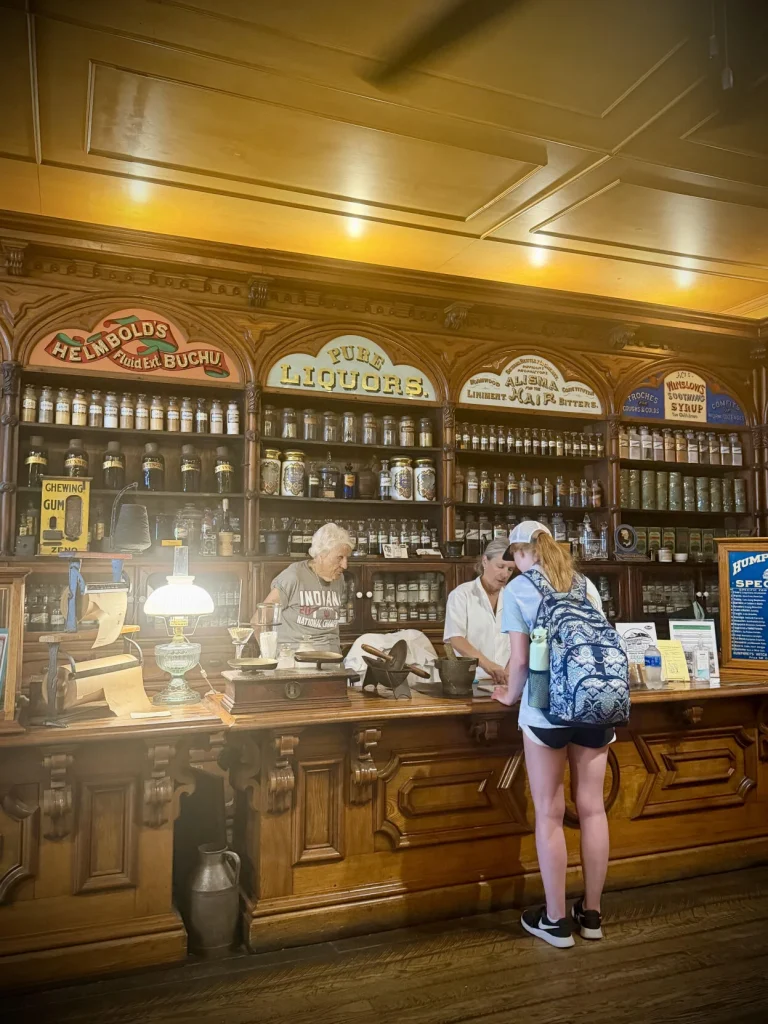
Tish Brafford and Suzie Glaze, the respective great niece and great-great niece of Hook’s founder John Hook, volunteered at the museum during the fair. The aunt-niece duo sat behind the two-toned wooden counter chatting with passersby and demonstrating how pharmacists used to measure out medicines to create pills.
The stores operated for much of Brafford’s and Glaze’s lifetimes, and Brafford remembers growing up with the family business.
“I was not allowed to go to Haag’s drugstore, which was across the street from Hook’s drugstore,” Brafford said. “My mother made it very clear. … We’re family, we support family.”
With her connection to the museum, Glaze filled out an interest form to volunteer at Hook’s during the state fair, she said. Two years later, the museum contacted Glaze to take her up on the offer, and she asked Brafford to come along.
“I didn’t give her much choice,” Glaze said.
Both ladies loved interacting with store visitors, from the kids who enjoyed the museum’s hands-on activities to the adults who remembered the former pharmacy chain.
“It’s truly a living museum,” Glaze said, “because people do come in with their stories.”
Several visitors worked for the drugstore or had a connection with the founders, while others simply enjoyed pharmaceutical history, the ladies explained.
“Pharmacists come in here all the time and tell me about pharmacy stories and the different pill bottles,” Glaze said.
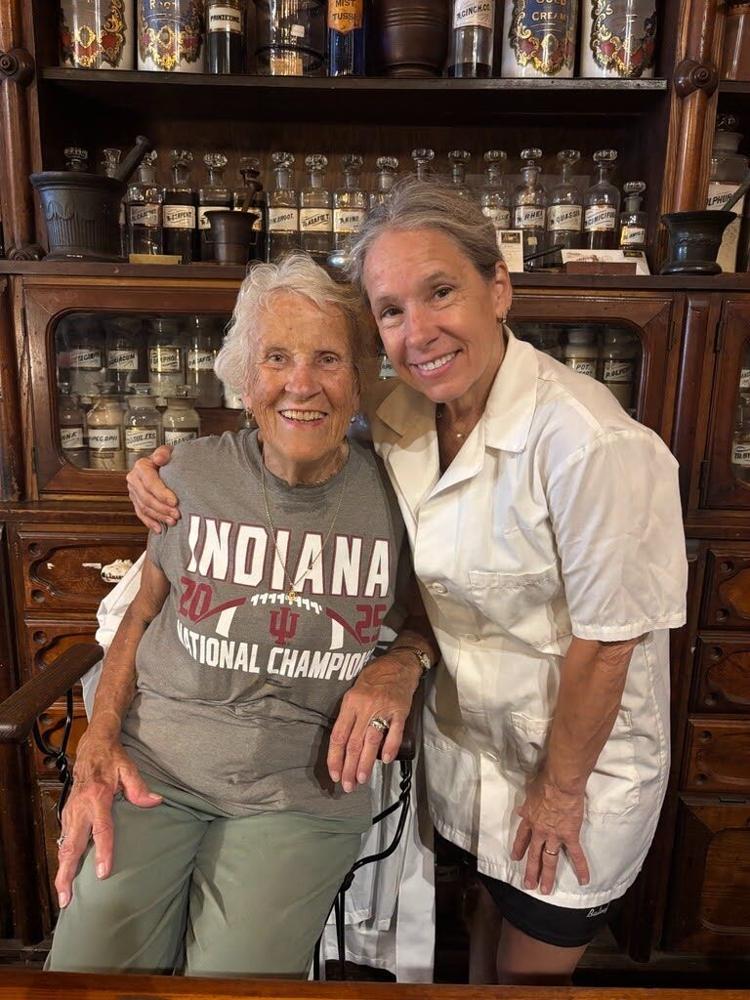
Volunteers Tish Brafford, left, and Suzie Glaze teach TSF reporter Lauren Warner, right, about compounding medicines at the Hook’s Drugstore Museum during the most recent Indiana State Fair in August.
Photo by Colleen Steffen, TheStatehouseFile.com.
Tish Brafford, left, and Suzie Glaze, the respective great niece and great-great niece of Hook’s founder John Hook, volunteered at the Hook’s Drugstore Museum during the most recent Indiana State Fair in August.
Photo by Lauren Warner, TheStatehouseFile.com.
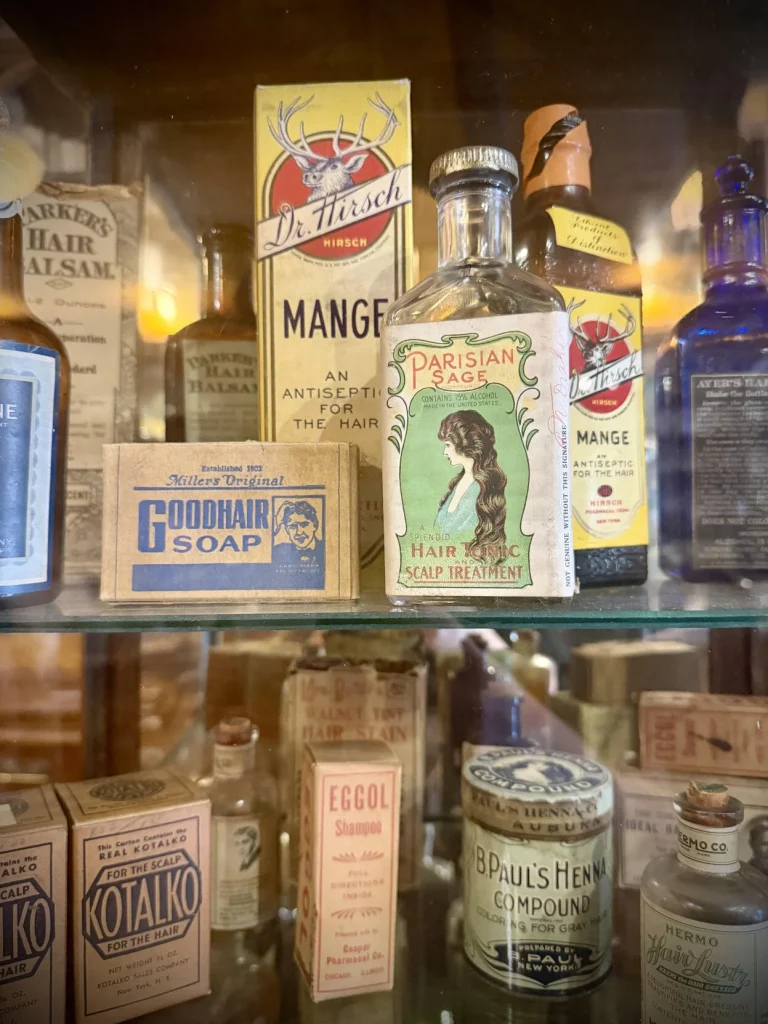
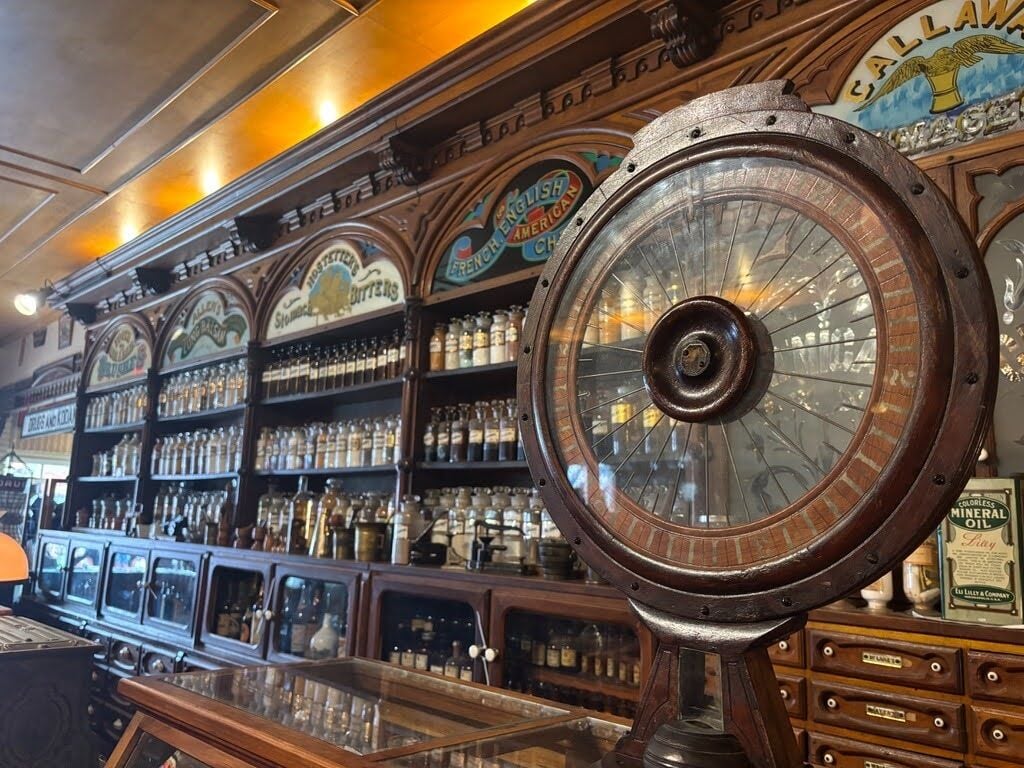
Modeled after a late 19th-century pharmacy, the museum contains the original cabinets from the Sam H. Hoshour Drugstore in Cambridge City. These floor-to-ceiling cabinets overflow with antique medicine bottles, pharmaceutical equipment and medical advertisements, joining a variety of other displays to immerse visitors in pharmaceutical history. Visitors can also view the oak cabinets from the original Hook’s location in the museum’s gift store area.
The museum made its fair debut in 1966 as part of the festivities surrounding Indiana’s Sesquicentennial. Championed by Bud Hook, John Hook’s son and chairman of the drugstore chain, the late 19th-century pharmacy was recreated from the former “Better Babies Building.”
Sixty years later, the museum continues to welcome visitors, thanks to the help of volunteers like Brafford and Glaze who fill a variety of positions, from museum docents to artifact managers.
Though neither Brafford nor Glaze have pharmaceutical expertise, they enjoy soaking up the memories and experiences relayed by visitors across the antique drugstore counter, Glaze explained.
“This is just so much fun,” Glaze said. “I never know what story I’m going to get, or the connection that I have with them.”
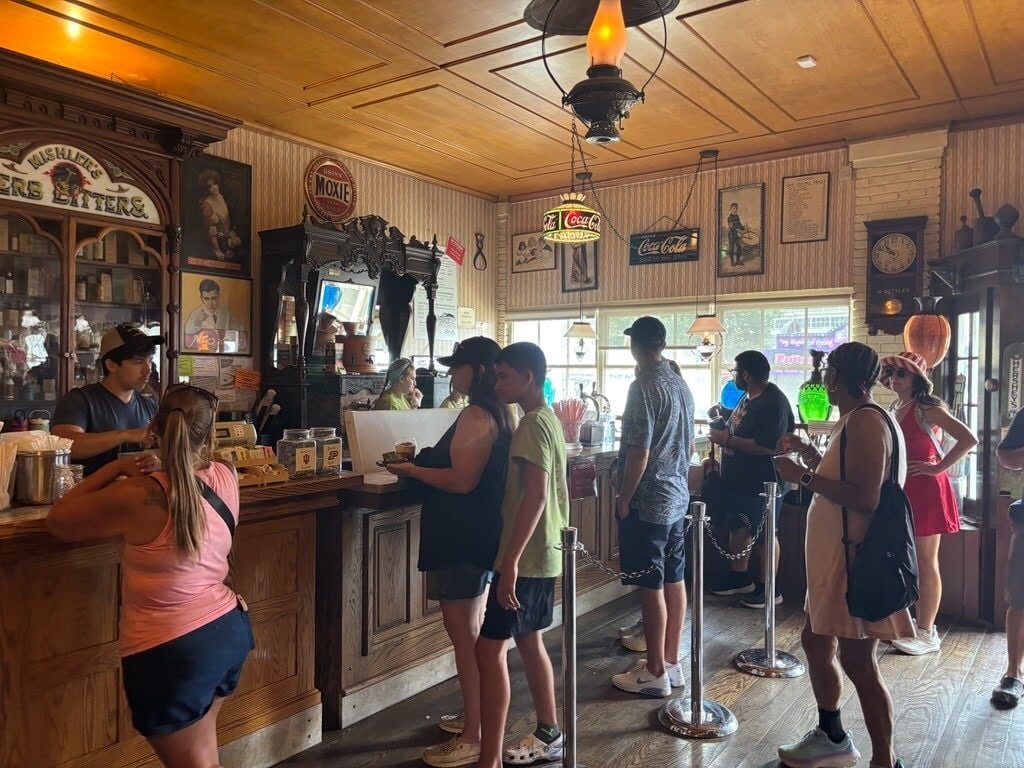
Fairgoers wait in line for phosphates, ice-cream sodas and other old-fashioned treats at Hook’s Drugstore Museum at the Indiana State Fairgrounds in August.
Photo by Lauren Warner, TheStatehouseFile.com.
Established in 1900 in Indianapolis, Hook’s Drugstores rose to prominence, spreading to more than 100 locations. The chain operated until 1987, when it was bought out by Kroger. Now, former Hook’s stores operate under the name of CVS, but visitors to the Indiana State Fairgrounds can time travel to the Hook's of over a hundred years ago with a visit to the Hook's Drugstore Museum.
Photo by Lauren Warner, TheStatehouseFile.com.